Guest Feature: Building the foundations for the store of the future

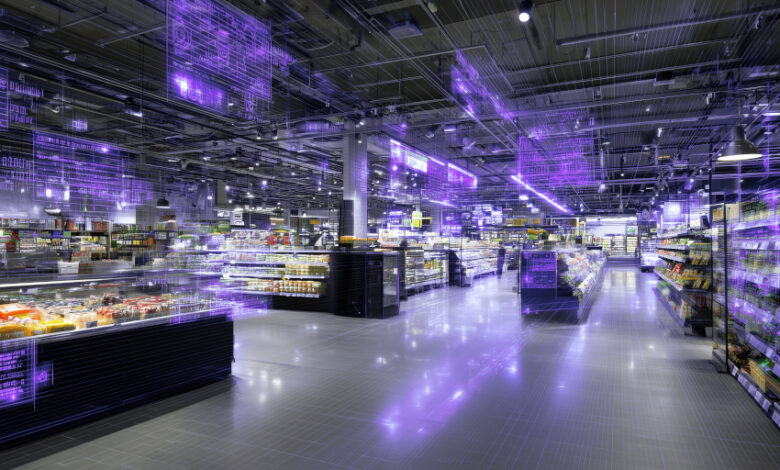
Modern retailers are in the middle of a profound shift. The way stores operate, the way infrastructure is designed and the way IT teams are structured are all being reshaped by rising customer expectations, operational costs and a new generation of digital capabilities. Yet for many organisations, the biggest barrier to progress isn’t strategy or ambition. It’s the underlying network foundation that everything depends on.
For IT teams, this conversation is not abstract. Network design choices have a direct impact on operational cost, from the number of suppliers they have to manage, to how quickly issues are resolved, to the amount of manual intervention required to keep stores trading.
One of the most significant challenges retailers face is designing network foundations that can support future workloads. The reality is that the store of the future will produce and consume more data than any previous generation of retail. Across Europe and beyond, retailers are recognising that the future cannot be built on a patchwork of country-by-country systems, inconsistent delivery models and technologies selected in isolation.
Building for tomorrow, not just today
Instead, retailers are turning toward standardised architectures that create consistency, simplify operations and give central IT teams the visibility and control they need. The goal is not uniformity for its own sake, but a platform that supports faster, more secure and more reliable innovation.
Centralisation is applied selectively, only in areas where scale delivers clear benefits. Procurement, shared platforms and core standards are often managed centrally to create efficiency and leverage.
Centre-periphery model allows synergies
At the same time, operational decisions that depend on local knowledge remain decentralised. Assortment, pricing, category management and store-level execution are typically owned by local teams, supported by shared tools and common frameworks rather than rigid mandates.
This centre–periphery model allows retailers to capture synergies without losing effectiveness. It reinforces the idea that consistency does not require uniformity, and that local autonomy is not a barrier to control when the right governance and supporting infrastructure are in place.
Why standardisation is rising on the retail agenda
Most large retailers have grown through decades of local optimisation. Each country has its own carriers, construction processes, suppliers and technology landscape. Decisions are shaped by local regulation, timelines and commercial constraints. Over time, this naturally creates complexity. Networks differ from market to market. Processes vary. Delivery expectations drift. Visibility becomes fragmented.
The problem is that retail is now a real-time business. Store operations increasingly depend on continuous data flow, connected systems and shared intelligence across regions. Technologies such as electronic shelf-edge labels, real-time inventory visibility, computer-vision loss prevention, and digital signage all rely on a stable, secure and high-performing network.
Factors driving the Need for Next-Generation Networks
Hyper-connected store environments
Sensors, handheld devices, digital labels, HVAC, CCTV, robotics and point-of-sale systems already generate high volumes of traffic. As more of these systems move to the edge and interact in real time, they place greater demands on the network.
AI-driven retail operations
Generative AI agents, real-time forecasting, automated loss prevention and dynamic pricing require low latency, secure pathways and reliable bandwidth. Retailers are beginning to design for a world where AI processes are distributed across cloud, edge and store systems.
Data-to-value expectations
Leadership teams increasingly expect granular, real-time insight into operations. That requires a network capable of supporting continuous data flows from hundreds or thousands of sites.
The rise of interactive retail
Customer screens, digital displays and in-aisle experiences are becoming embedded in store environments. These experiences rely on predictable connectivity and synchronised content delivery.
A modern retail network must be resilient enough to support these workloads, flexible enough to scale, and secure enough to withstand increased cyber pressure. That means designing not just for what the store needs today, but for what it will need five years from now.
Fragmentation creates friction
In this environment, fragmentation creates friction. When infrastructure behaves differently in each market, central IT teams face unnecessary challenges in planning, assurance and support.
A harmonised approach, supported by SASE, allows retailers to design a common secure networking architecture while still respecting local requirements. It brings a level of consistency that makes innovation scalable rather than experimental.
SASE as the enabler, not the headline
The shift toward SASE across global retail estates is not simply a technology refresh. It is a step toward unifying design principles, policies and common security standards. SASE offers the ability to centralise configuration, enforce consistent rules and monitor performance across all stores, wherever they are located.
But SASE alone is not the answer. It enables harmonisation, but it does not deliver it. True harmonisation requires alignment of processes, understanding of local markets, and an operating model that allows central teams to govern while local teams and delivery partners execute effectively. Retailers that succeed in this transition focus as much on operating models and human processes as they do on routing decisions, secure access and bandwidth. They think about how teams will work, how exceptions will be handled and how visibility will flow across organisational boundaries.
Respecting local realities while delivering global consistency
Centralisation does not mean ignoring local realities. It means building a model that accounts for them. Each country has its own way of doing things — different utility processes, council approval requirements, carrier performance characteristics and construction timelines. These local dependencies, if not understood, can introduce delays and risk into store openings.
Successful retailers create unified processes that accommodate local nuance. They build frameworks that are adaptable, not rigid. They rely on partners who understand local markets and can coordinate with regional trades, utilities and suppliers. And they design systems that give central IT teams clear visibility into status, issues and progress regardless of geography.
The cultural dimension of standardised IT
This is where standardisation shows its true value. It gives central teams the ability to make informed decisions quickly and reduces the operational noise that comes from inconsistent ways of working. At the same time, it empowers local specialists to act effectively within a shared framework. This often means combining central standards with a delivery model that draws on the strongest local capabilities in each market.
Technology is only one part of standardisation. Culture is the other. Retail organisations with strong engineering cultures value precision, clarity and reliability. They prefer straightforward communication, transparent expectations and partners who work in a professional, understated way. They appreciate teams that prioritise preparation over performance and consistency over theatrics.
Shared values make the transition smoother
This cultural alignment matters because standardisation introduces change into the organisation. It affects how teams collaborate, how decisions are made and how responsibilities are divided. Having suppliers and internal teams who operate with shared values makes the transition significantly smoother. Over time, this shared way of working can lift performance across the wider supplier ecosystem, moving away from individual supplier performance.
Professional humility, doing the work quietly, reliably and without unnecessary attention, is often more valuable than bold claims or sweeping promises. Trust in a standardised environment is earned gradually, through behaviour, not branding.
A foundation for the next decade of retail growth
Standardised infrastructure is not the end goal. It is the foundation for everything retailers hope to build next: more efficient operations, more intelligent automation, better customer experiences and safer, more resilient environments.
By creating consistent, modern network architectures, retailers position themselves to innovate faster and scale new capabilities across regions with less friction. They give their central IT teams the tools to govern effectively and provide local teams with a stable platform to deliver stores on time and maintain high service standards.
The future store requires a very different kind of infrastructure
Ultimately, the store of the future will require a very different kind of infrastructure, one that is unified, adaptable and designed for the realities of modern retail. Standardisation is the first step in that journey, and the organisations that invest in it today will be the ones that can respond confidently to the opportunities and pressures of the years ahead.