“Creating an architectural foundation for innovation”

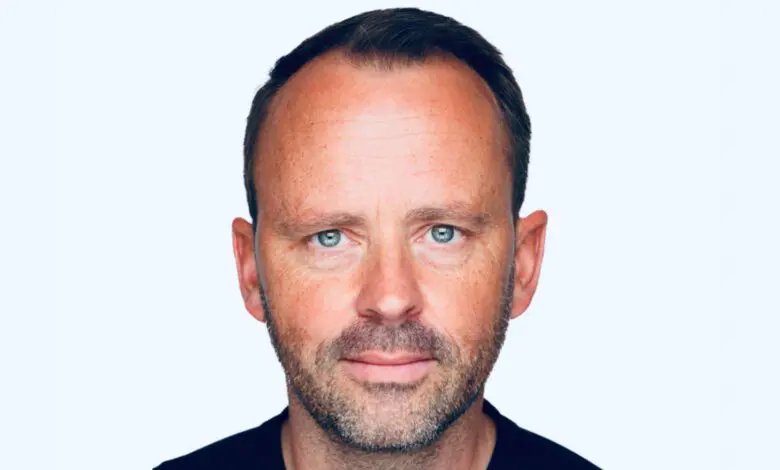
Michael Scheibner has been CEO of GK since 1 June 2023. He has been with the in-store technology specialist, which is now part of Fujitsu, since 2009, most recently as Chief Strategy Officer. According to data from Datos Insights, GK is the world’s number one POS software provider in terms of new installations in the retail sector. As CEO of the market leader, Michael Scheibner regularly talks to the top executives of the world’s largest retail companies and is familiar with many of their strategies. In the run-up to EuroShop in Düsseldorf, he shared his thoughts with Björn Weber, whom he has known well for 16 years.
Retailers cannot invest in all the exciting technologies on display at EuroShop. What advice do you give the top managers of the retail companies you meet regularly to help them focus their strategies and structures?
Michael Scheibner: There’s no question that retail companies with efficient, innovative IT systems have a clear competitive advantage. In conversations I’ve had with executives across retail, IT, and software architecture in various regions around the world, structural factors consistently emerge as key drivers behind this reality. At the same time, recent years have shown that long-term success doesn’t come from launching as many standalone innovations as possible. Instead, the retailers that will ultimately lead the market are those that have built a strong foundation — powered by a Unified Commerce Architecture.
What do you understand by a Unified Commerce Architecture – is it just a new word for omnichannel capability?
Michael Scheibner: One of the core objectives of this architecture is to deliver consistent shopping experiences for customers — not only across sales channels, but also within individual stores. This includes creating faster, more seamless checkout experiences at staffed registers, self-checkouts, and mobile points of sale, as well as enabling smooth and efficient e-commerce order pickup. With this kind of architecture in place, retailers can also offer greater flexibility in payments, allowing them to introduce new payment methods and processes quickly and with minimal complexity.
But you are not just referring to checkout technology when you talk about this kind of architecture?
Michael Scheibner: Absolutely. A Unified Commerce Architecture lays the foundation for optimising retail operations end to end and accelerating innovation, without the delays typically caused by fragmented legacy systems. Real-time inventory visibility enables more accurate decisions around pricing, replenishment and margin management. It also supports predictive customer engagement, allowing retailers to recognise and serve customers seamlessly, without operational friction.
Lastly, it elevates loss prevention to an entirely new level, while simultaneously strengthening operational control and enhancing the customer experience – particularly at self-checkout.
Has the retail industry focused too much on innovation and too little on modernising its core software landscape?
Michael Scheibner: In many ways, the past decade has been defined by the accumulation of technologies. New applications were layered on top of existing systems and connected through increasingly complex networks of APIs and interfaces to ensure everything functioned together.
This model worked reasonably well when the customer journey was still relatively linear. But it is becoming progressively less suited to the environment retailers face today.
Modern retail demands far greater flexibility. Retailers must serve more contexts and customer segments, support more payment methods, enable more loyalty interactions, and operate across more channels than ever before. Once a certain level of complexity is reached, fragmented systems can no longer manage this reliably — or only at unsustainably high costs. The result is a growing risk of failing to meet customer expectations around speed, accuracy and security.
Let’s break this down specifically in terms of the introduction of self-checkouts – in Germany, the number of SCOs has doubled in the last three years.
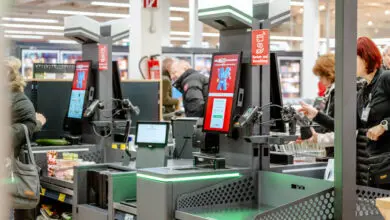
At events like EuroShop, self-checkout plays a central role — and for good reason. In times of labor shortages, it offers a practical solution that aligns with customers’ desire for fast and convenient checkout experiences. At the same time, however, it also exposes — quite ruthlessly — the true quality of a retailer’s technological foundation.
When systems are fragmented, introducing self-checkout often becomes a stress test. Weaknesses quickly surface: loyalty programs fail to recognise customers reliably, age verification causes delays, items are misidentified or mispriced, or security rules conflict with one another. The result is a checkout experience that feels unstable and inconsistent. Add inventory discrepancies to the equation, and SCO becomes a significant economic challenge for many retailers.
By contrast, a modern Unified Commerce Architecture prevents many of these pitfalls from the outset. In this environment, self-checkout is simply another POS variant that fully leverages the same infrastructure and technology as other front ends. Customer loyalty — an integral component of a Unified Commerce Architecture — does not require separate integration but is already embedded within the platform.
What we are also seeing is that technologies integrated at the platform level, such as computer vision, are rapidly evolving from experimental features into reliable operational tools. Security and customer experience are no longer in opposition – they reinforce one another.
For all these reasons, the future of self-service checkout is no longer determined by hardware alone. It depends on how seamlessly item recognition, customer identification, payment logic, and loss prevention are integrated into a single, unified system.
If you could give just one sentence of advice to all retail representatives visiting EuroShop, what would it be?
Those who invest in the right commerce architecture now will lay the foundation for future success – those who hesitate may lose out.