
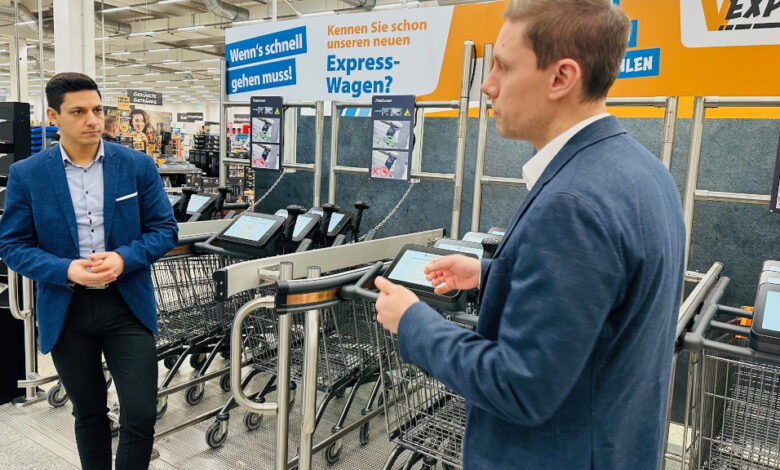
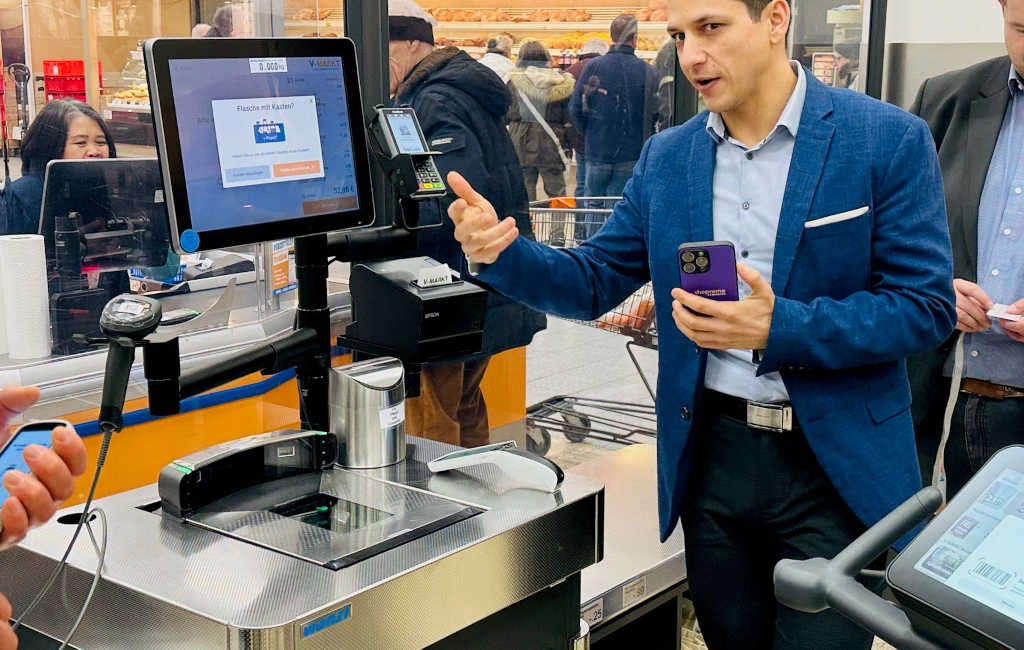
This week, the retail company Georg Jos. Kaes began its announced trial of various checkout methods at its V-Mart in Munich’s Euro-Industriepark. The Retail Optimiser was on site for the launch.
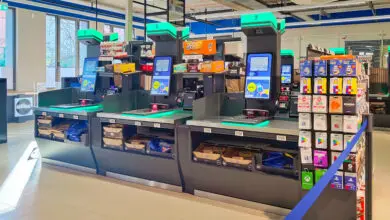
The test is the first live deployment of Wanzl’s smart shopping trolley Fastlaner. 16 of the robust trolleys are available at the entrance. Alternatively, customers can scan their goods using one of 90 handheld scanners from Zebra or at the end of their shopping trip at one of the seven newly installed self-checkouts, which are also from Wanzl.
Dominik Endres, Head of IT at Georg Jos. Kaes, was delighted that the partners had managed to integrate all the systems in just three months: “This project is an important milestone for us on the way to the digital checkout area of the future.” The Retail Optimiser had already reported on the project in advance.
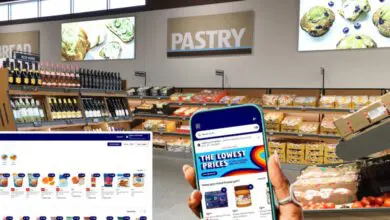
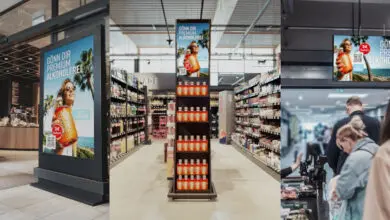
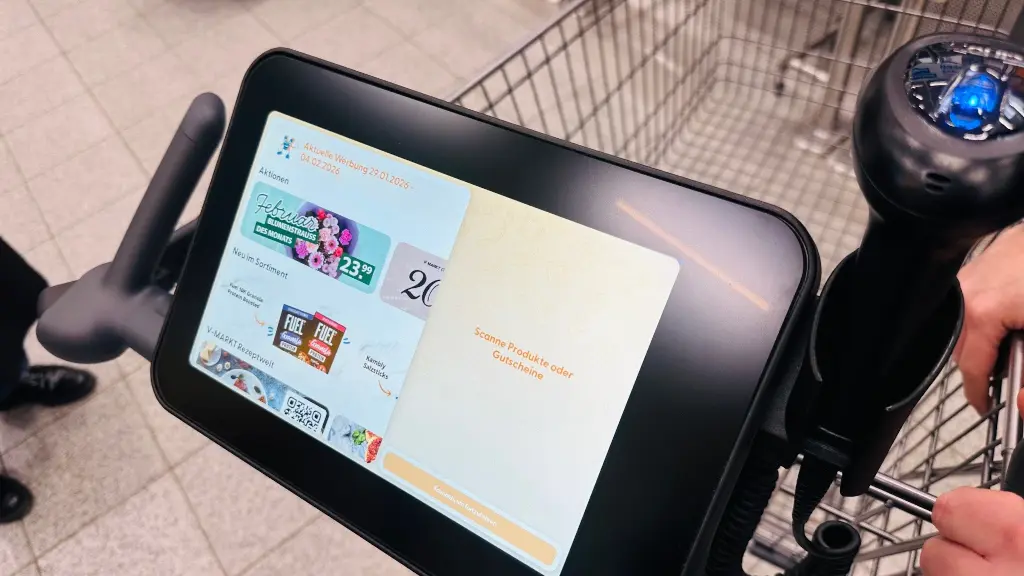
The software for both self-scanning processes comes from Austrian specialist Shopreme, which, in addition to the self-scanning logic, is also implementing the important topic of retail media on the Fastlaner in this project. Georg Jos. Kaes displays his current leaflet on the smart shopping trolley for the launch. In principle, and if the technical requirements are in place at the retail company, much more is of course possible – such as location- and shopping basket-related promotions, reports Kevin Müller from Shopreme on site.
Shopreme implemented the software side of the project in close cooperation with Deutsche Retail Services (DRS), whose POS software Georg Jos. Kaes uses. “Our drs POS system enables all new shopper services without having to adapt Kaes’ central systems. The mechanisms available for the classic service checkout are simply reused,” explained Uli Schäfer, CEO of DRS AG.
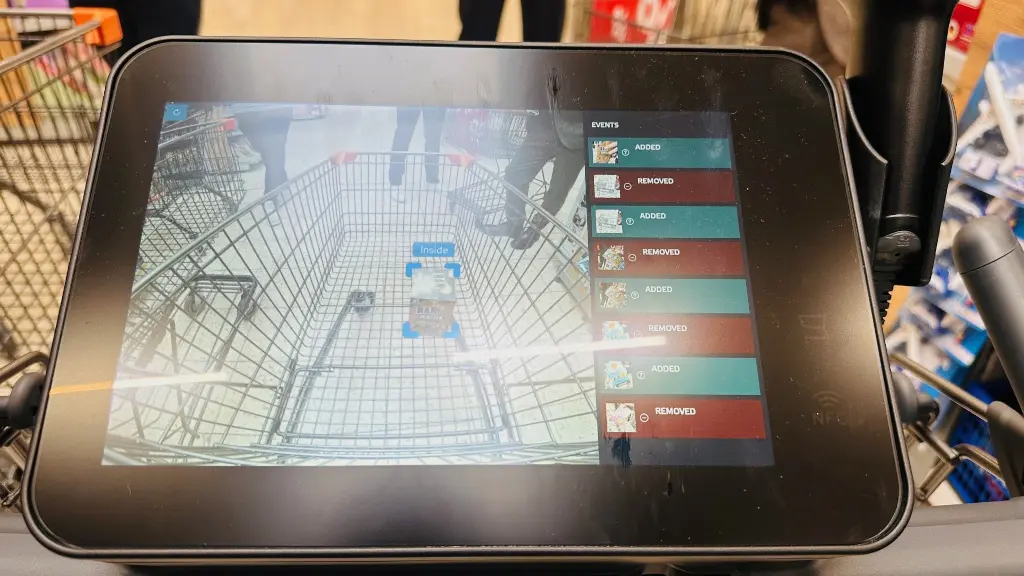
The new Fastlaner from Wanzl is particularly robust. Wanzl has deliberately decided not to use scales in the shopping trolley due to the costs and, not least, the complexity, which could entail too much maintenance in the harsh retail environment. Instead, Wanzl relies on camera-based detection of no-scan cases. In practice, this proved to be reliable on the day of the premiere: if a customer places something in their shopping trolley without scanning it first, the Fastlaner records the event in the form of a short film.
Not always, but only in selected cases, a prompt informs the customer on the user screen about the event in the form of a question asking whether they have scanned this product. If these events occur frequently, the shopping trolley is checked by an employee at the checkout. The employee can then review all events of suspected no-scans together with the customer.
Wanzl had worked long and hard on the development of the Fastlaner. Prototypes that were not yet fully mature had previously been used at Bünting, Edeka Netto and also by independent Edeka shop owners. The finished product now impresses especially with its robustness. Stefan Huemer, who is part of Wanzl’s Fastlaner development team, explained in Munich that the Smartcart can also be stored in outdoor boxes in the car park and, thanks to a built-in heating module, can withstand temperatures ranging from minus 25 degrees to 50 degrees Celsius. Wanzl has solved the charging challenge well: the Fastlaner is reliably supplied with power via rails at its parking station without having to be connected manually.
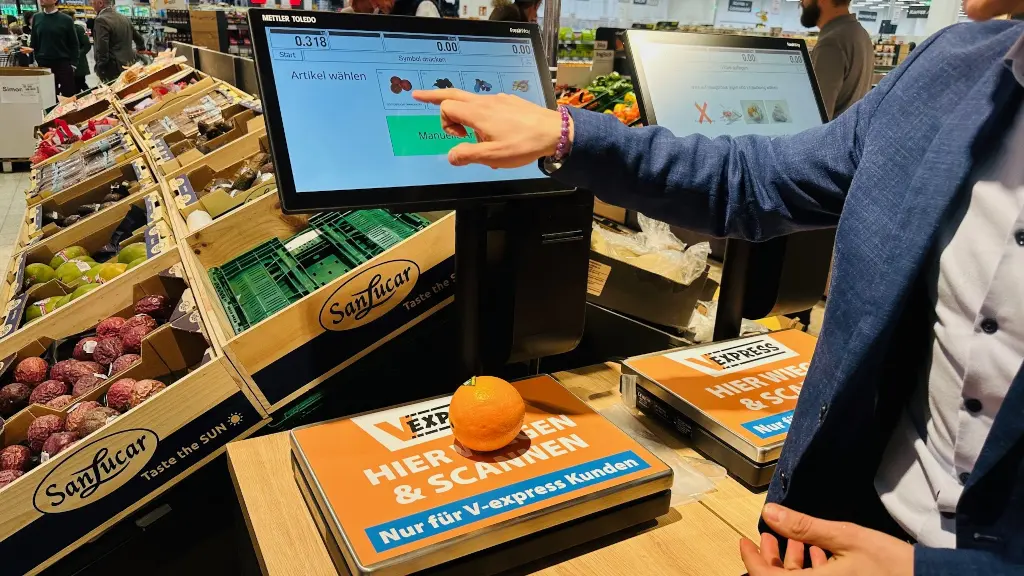
In the fruit and vegetable section of the V-Markt, Georg Jos. Kaes has installed the new camera-based, AI-supported scales from Mettler Toledo for the new self-scanning processes, which either recognise loose fruit and vegetables directly or show the customer a small selection of goods on the screen. The Retail Optimiser reported on their use at Lidl.
But no premiere is without its glitches. On the day of the inauguration, the AI scales did not work very well, but this was not due to Mettler Toledo, but to project staff who had stuck large orange stickers on the weighing surfaces of the scales to guide customers. As a result, the scales recognised everything as oranges, including the smartphone of the Retail Optimiser publisher.