Guest Feature: Real-Time insights into inventory – made possible thanks to RFID
RFID has evolved from its deployment in pilot project to a scalable solution in the fashion retail sector and is now being implemented in hundreds of stores. Practical examples, such as those from C&A and other international retail companies, demonstrate how the comprehensive integration of RFID leads to increased stock accuracy and consequently fewer out-of-stocks, whilst also enabling more efficient processes. Diebold Nixdorf supports international rollouts, provides the RFID infrastructure and manages the day-to-day operation of the antennas.
Fashion stores are a stage. They’re full of creative energy, attractive products and people looking to enjoy their shopping tour. While retailers aim to provide their customers with an exceptional shopping experience, they must overcome several challenges behind the scenes. Those arise from rapid product line changes and short production cycles, coupled with high return rates. This leads to low inventory transparency– also, tracking items is time-consuming. At the same time, however, retailers must avoid overproduction in the interest of sustainability and have to meet customers’ price sensitivity.
So how can retailers in the fashion sector offer their customers an engaging shopping experience while simultaneously solving various challenges? The answer lies in next-generation smart store concepts that rely on mobile solutions, flexible POS systems such as the DN Series® EASY ONE, and another key component: smart RFID technology. How exactly do retailers, customers, and staff benefit from this? A look at everyday store operations reveals the advantages RFID technology offers.
Real-time tracking
Does a customer need a blouse in a different size? Using RFID tags embedded in the clothing, staff can quickly check via tablets whether it’s in stock. Does an employee want to put a pair of jeans back on the shelf but can’t remember exactly where they are? Here, too, the RFID solution can help, as items are tracked in real time throughout the store, creating fundamental transparency.
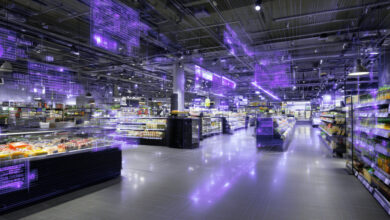
This is made possible, on the one hand, because each RFID tag represents a unique SKU (Stock Keeping Unit), which allows products and variants to be identified. Additionally, readers mounted on the store ceiling help locate items quickly and provide accurate information on their availability. This gives retailers precise insight into inventory, which is tracked automatically – both on the sales floor and in the warehouse – while manual errors are reduced.
Smooth checkout, fewer inventory discrepancies
Another key benefit that RFID enables is increased sales. This is made possible, for example, by ensuring that items are always in the right place in the store without major disruptions and that inventory can be restocked consistently and precisely as needed. Finally, customers benefit from being able to easily receive assistance from staff who can help quickly and competently, while focusing on providing advice rather than the tedious search for items.
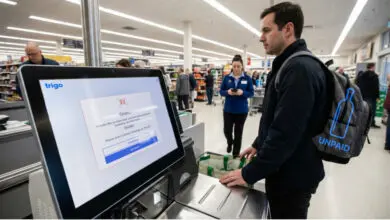
RFID technology plays a particularly important role at checkout, as this marks the final step of the shopping experience. A positive conclusion is even more crucial here. This is where RFID technology is truly convincing: customers no longer must scan items laboriously one by one, but can simply place them, for example, in the box where they are automatically scanned.
Successfully in use
This makes the checkout process fast and convenient, resulting in fewer errors. This, in turn, has a positive impact on inventory discrepancies, which can be significantly reduced by using RFID tags. This is made possible not only by a lower error rate at checkout, but also by automated item recording with fewer discrepancies, precise inventory counts, and effective theft protection enabled by item tracking.
Diebold Nixdorf has already provided the complete RFID infrastructure for retailers in the fashion sector. This includes also large-scale rollouts: For an international fashion retailer, for example, more than 25,000 RFID readers were installed in the ceilings of over 325 stores – in only six months, spread across 22 countries. Diebold Nixdorf also manages the entire antenna infrastructure with its DN AllConnect ServicesSM to ensure maximum availability and reliability.
C&A succeeds with RFID
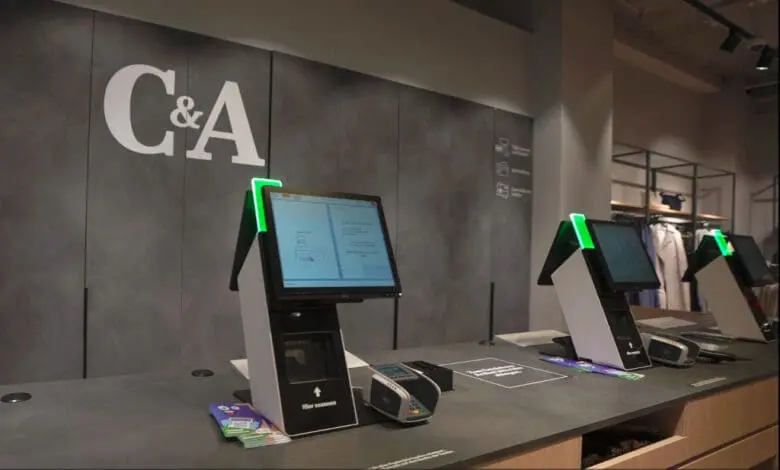
Another example is C&A. In its stores, Diebold Nixdorf has converted both staffed cash registers and self-checkouts to RFID technology. In parallel, C&A’s other partner companies have also adapted the processes involved in goods movement to RFID. This comprehensive use of RFID has enabled numerous optimisations: Employees now have access to transparent and reliable inventory information at all times, manual inventory efforts have been significantly reduced, and restocking can be carried out in a more targeted and efficient manner.
The primary effect was a noticeable reduction in out-of-stock situations – items are more reliably available. At the same time, the shopping experience has also been improved: The shopping process is simpler for customers, and self-checkout in particular is faster and more convenient than before.
High level of maturity and new use cases
As is well known, RFID technology has been in use for many years. “Today, however, the technology has reached a level of maturity that enables entirely new use cases and applications – and thus creates real added value for retailers, customers and staff,” says Thomas Blechert, Global Director of Touchpoint Product Management at Diebold Nixdorf, summarising the latest developments.