Rewe Group aims to improve animal welfare through AI research project
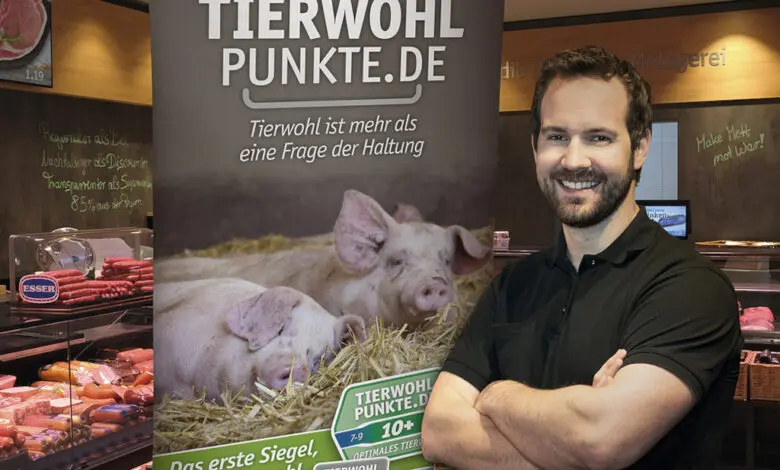
Rewe Group’s Centre of Excellence for Agriculture has launched an AI research project to analyse animal welfare, in collaboration with stakeholders from academia and the industry. Advisory board member Max Esser-Geneschen initiated the project, which aims to investigate the potential of camera and sensor technology in livestock farming under real-world conditions.
The camera technology deployed to collect and analyse project data is provided by interdisciplinary start-up VetVise. Specialists from the fields of veterinary medicine, agriculture and IT founded the company in autumn 2020 as a spin-off from the University of Veterinary Medicine Hannover Foundation. VetVise aims to digitise and thereby optimise processes in livestock farming.
Other project partners include Dr Stefanie Retz from the Lower Saxony Agricultural Transformation Research Network (trafo:agrar) at the University of Vechta, Prof. Dr Diana Meemken from the Free University of Berlin, and the Veterinary Association for Animal Welfare (TVT), represented by Dr Andreas Franzky and Prof. Dr Thomas Blaha, who is also a member of the Hannover University of Veterinary Medicine Foundation. Additional vets are advising on the project. As a pig farmer, Gesa Langenberg, a member of the advisory board of the Centre of Excellence for Agriculture, contributes her practical experience.
Interdisciplinary collaboration aims to ensure practical applicability
From the outset, close collaboration between academia and the farming sector is intended to ensure practical applicability of the results. Initially, selected pilot farms specialising in pig and poultry farming will test the technology. The project partners aim to investigate the specific added value the technology can deliver for animal welfare and practical work on farms.
Prof. Thomas Blaha explains the practical significance of the project, stating that the interdisciplinary approach allows for a well-founded assessment of the contribution AI can make to animal health, and adds: “If we succeed in detecting changes in animal behaviour at an earlier stage, we can react more quickly and take more targeted action.”
Responsibility remains with humans
AI usage shall support farmers in continuously monitoring welfare and health of farm animals. The systematic collection of data is intended to provide additional insights and highlight anomalies at an early stage. Max Esser-Geneschen is convinced that the use of AI opens the opportunity to understand animals and their needs even better. He explains: “If we use the technology responsibly, we can take animal welfare and health to a new level whilst supporting farmers in their day-to-day work.”
The project aims to scientifically assess the potential and limitations of AI-based analyses under real-world conditions and to gain reliable insights for future application in livestock farming. It is intended to contribute to the further development of data-driven approaches in animal welfare and health. However, responsibility for the wellbeing of life stock always remains with humans.