Delhaize optimises forecasts with AI from Symphony AI

By switching its automated replenishment system to AI-powered demand forecasting and replenishment optimisation from Symphony AI, Delhaize has significantly reduced stock shortages and wastage. Across its network of stores, the retailer – part of the Ahold Delhaize Group – has seen its forecasting accuracy improve by an average of five percentage points, and by up to ten percentage points at highly seasonally sensitive locations.
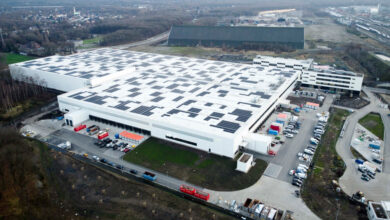
The Belgian retail group has been using Symphony AI’s planning software since 2009, when the company was still part of Aldata. Delhaize has been relying on the solution for some time to manage the stock levels of five distribution centres and around 600 retail outlets in Belgium. The successes announced now relate to the switch to Symphony AI’s new AI-based forecasting models.
The software forecasts demand at the level of individual items, sales days and locations. Based on this, the system generates order proposals for stores and distribution centres. The solution can automatically process routine orders, whilst submitting higher-risk orders to the relevant staff for review.
Seasonal trends, promotions and weather are factored in
For its forecasts, Symphony AI analyses, amongst other things, historical sales data, promotions, seasonal trends, days of the week and weather data. In doing so, the software takes into account, amongst other things, delivery schedules, lead times, available stock, transport capacities and pre-orders for promotions.
“We cannot pass on stock risk to our partners. Our forecasts must be accurate. Otherwise, our distribution centre bears the costs,” says Géraldine Durant, Supply Chain Replenishment and Master Data Director at Delhaize. The results across the logistics network and in the affiliated stores have confirmed the decision to adopt AI-based models.
Integrated into SAP Retail
Delhaize has integrated the applications into its existing SAP Retail merchandise management system. Particularly for fresh produce, Symphony AI’s software is designed to better balance excess stock and stock shortages. This enables Delhaize to increase product availability without building up unnecessarily large stock levels.
The switch to exception-based order verification has significantly boosted the productivity of Delhaize’s replenishment teams, meaning that staff can now focus on critical alerts and more value-adding activities, rather than checking every order proposal individually. Today, around 20 per cent of order proposals from the distribution centres are automatically approved without any user intervention, whilst Delhaize is aiming for an automatic approval rate of 50 per cent once the supplier base is expanded.
Manual intervention remains the exception
For orders requiring review, the amendment rate stands at around 10 per cent in the dry goods categories and 20 per cent in the fresh produce sector – which reflects the quality of the AI suggestions rather than the need for manual corrections. With the support of Symphony AI’s managed services team, Delhaize continues to improve forecasting accuracy by 1.5 to 2 percentage points per year.
The technological foundation of the collaboration predates the current AI solution by some years. As early as August 2009, Delhaize Group selected Aldata’s Gold software for merchandising and supply chain processes across its European subsidiaries. “We have been working with Symphony AI for more than 15 years and were fully convinced by the AI-based forecasting models,” says Géraldine Durant.
Aldata Gold rolled out as early as 2010
In February 2010, Delhaize Belgium tasked Accenture with the multi-year roll-out of the platform. The systems integrator implemented Gold as an end-to-end solution for the supply chain. This enabled Delhaize to standardise transactions, improve control over stock levels and reduce the costs of stockholding.
Aldata and the analytics specialist EYC were merged by the investors Symphony in 2012 to form Symphony EYC. In January 2018, the provider Symphony RetailAI was formed. The former Gold division contributed its business in retail processes, supply chain planning and replenishment management.