Amazon just walks out of scanless stores

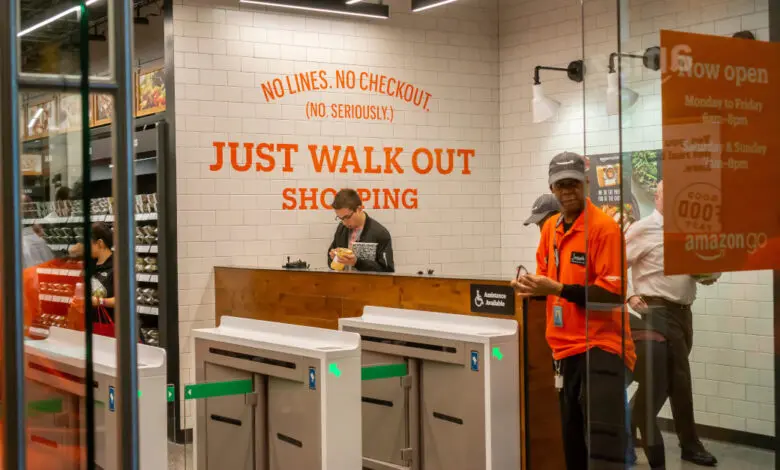
Amazon is closing all its physical Amazon Go and Amazon Fresh stores. Most of the Amazon Fresh outlets will be converted into Whole Food Stores. Its own Just-Walk-Out technology will the online giant only deploy within its own company: Amazon is using the technology in the break rooms at more than 40 of its distribution centres in North America. This year, numerous additional logistics centres are to be equipped with the technology.
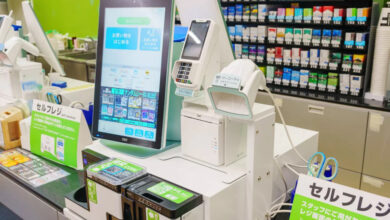
The fact that the online giant no longer wants to operate its own scanless stores for the public will certainly not help the distribution of its Just-Walk-Out technology to other companies. According to Amazon, 360 locations of other companies in five countries currently use the scanless technology. However, many of these users are not food retailers, but caterers in hospitals, manufacturing plants or stadiums.
The wave of scanless technology initiated by Amazon, in which every movement of all customers in the store is recorded by cameras and analysed by AI in such a way that there is no longer any need to scan items or have cash registers, had meanwhile swept up the who-is-who of the retail industry. Technology providers such as Trigo, Aifi, Zippin, Pixevia, Cloudpick and Grabango had installed their technologies in stores belonging to Auchan, Aldi Nord, Aldi Süd, Tesco, Edekas Netto and the Rewe Group. Sainsbury’s even had a store with Amazon’s Just-Walk- Out technology.
Scanless requires manual intervention
Most of these scanless technologies have since disappeared from these stores or have been supplemented by self-checkouts. The technology fell into disrepute after it became apparent that it did not work automatically in all cases. Video sequences of purchases were and are being transferred to low-wage countries, even from countries with high data protection standards such as those of the EU. There, people sitting at computers manually decide on cases of doubt – who took which products – where AI cannot deliver a reliable result. The Retail Optimiser reported.
One exception to the rule that a retail company tests cashierless technology in a handful of its outlets at most and then backtracks is the Polish convenience chain Żabka. Using technology from Californian provider Aifi, the company operates around 50 cashierless Żabka Nanos in Poland. The Retail Optimiser reported. Two of these Żabka Nanos stores are also located in Germany. However, they are not open to the public, but are located within a student residence in Potsdam-Golm and within the Tesla factory in Grünheide, Brandenburg, as reported by Supermarktblog.com.
Amazon Fresh never made it to a third country
Amazon was only present in the US and the UK with physical stores for its two retail chains, Amazon Fresh and Amazon Go. Amazon had put plans to expand these banner operations in the form of brick-and-mortar stores in Europe on hold early on.
In the United States, Amazon never operated more than 58 Amazon Fresh stores across nine states. In the United Kingdom, there were never more than 19, all of which were located in the Greater London area. Even at its peak, the scanless convenience format Amazon Go had even fewer outlets: never more than 16 in the United States and not even a handful in London.
Expansion of same-day delivery including food
However, Amazon is by no means withdrawing from the grocery business, but is expanding it massively: primarily through its same-day delivery service, through which the company already offers groceries, including fresh produce, in 5,000 cities and towns in the US. This service, which allows customers to order selected non-food products as well, is set to be expanded massively this year.
Whole Foods, Amazon’s brick-and-mortar food retail chain, is set to gain 100 new stores, bringing its total number of locations to around 550. This is likely to include the approximately 50 Amazon Fresh stores, which will not be closed but converted into Whole Foods stores. With its online food retail business, Amazon already sees itself as the third-largest food retailer in the US, behind Walmart and Kroger, with total food sales of 150 billion US-Dollars per year.