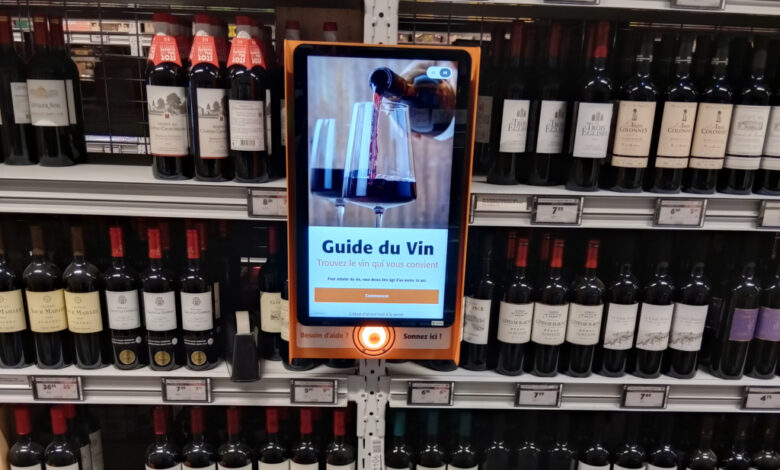
Belgian retailer Colruyt will extend its digital wine assistant to all stores in Belgium and Luxembourg by March 2027, following a successful four-month trial at eight locations. The retailer aims to simplify wine selection by combining personalised recommendations with its lowest-price positioning.
The touchscreen-based assistant allows shoppers to filter among the 400 items in the assortment according to their preferences, including wine type, country of origin, food pairing and budget. Based on their answers, the tool recommends up to 18 suitable wines, including alcohol-free alternatives. Products currently on promotion are clearly highlighted. The selection is refreshed every two weeks.
During the four-month pilot, approximately 2,500 customers reportedly used the assistant to navigate the assortment, which would equate to a handful of interactions per store daily. That being said, three-quarters of them reportedly expressed satisfaction with the recommendations. The most frequently used filters related to wine type and food pairing.
The need for digital assistance has been long in the pipeline. As early as 2023, Colruyt first developed its Wine Assistant with digital agency ‘In The Pocket’. The technology was conceived as a complement to, rather than a replacement for, in-store wine specialists. Each aisle is equipped with a bell allowing customers to request personal assistance from a dedicated member of staff. This feature is now located under the digital display.
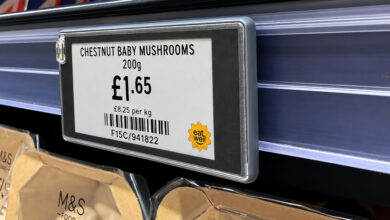
Over the years, retailers have explored different technological approaches to offering shoppers customised advice for their wine assortment. Many have opted for mobile app integrations, which are easier to scale, but suffer from limited visibility on the shop floor. Others such as Marks & Spencer have opted for in-aisle QR codes relying on third-party expertise, enhanced electronic shelf labels such as Latvian Spirits&Wine, or conversational AI kiosks. Often found at flagship locations, very few of these initiatives have been rolled out nationwide.