Kroger is driving store digitalisation

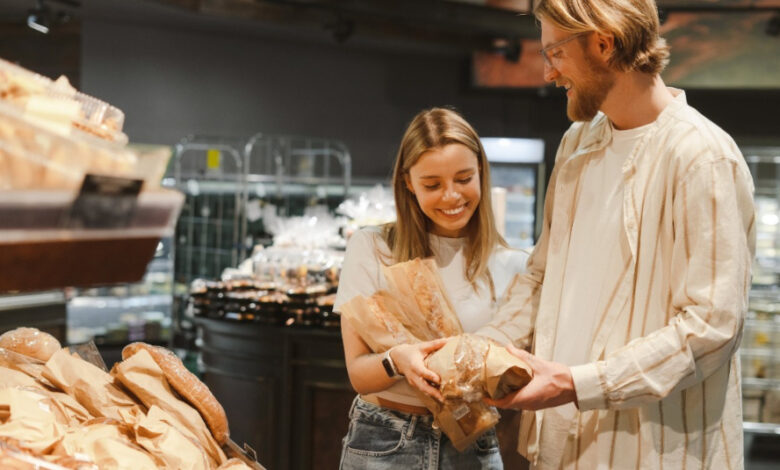
Kroger is seeing initial success with its ‘The Connected Store’ digitalisation initiative and aims to press ahead further. The company has reported this at its Analyst and Investor Day conference at the end of October. By introducing RFID for bakery products, the US supermarket operator has been able to speed up stock-taking by 70 per cent and halve the amount of food waste.
Kroger has already implemented Avery Dennison’s RFID technology in 1,500 of its supermarket bakeries. Mark Ibbotson, Executive Vice President and Chief Operations Officer, explains that the roll-out is set to be completed across more than 2,300 bakery outlets by 2029. Stock is tracked at item level. The solution had achieved a read performance of 98 per cent.
Thanks to improved inventory data, staff can restock missing items more quickly. Price reductions and delistings can also be carried out sooner. Overall, this has improved sales in the category by two percentage points and margins by half a percentage point. In future, the company plans to extend the solution to other fresh food sections.
Robots monitor the shelves
Kroger has deployed around 900 Tally robots from Simbe Robotics in its stores. The company aims to have 2,100 of these systems installed by 2029. During operation, Tally moves through the aisles. It is designed not to disturb customers whilst they are shopping and to move out of the way in good time.
Using computer vision, the system detects out-of-stock situations and checks prices as well as promotions. Kroger will share this data with its suppliers. Thus, it aims to jointly work on increasing product availability and sales.
ESLs help with product searches
Furthermore, Kroger is increasingly relying on digital price labelling. The company developed the solution in collaboration with Microsoft and uses Azure as its cloud and data platform. Mark Ibbotson explains that, to date, 36 million ESLs have been installed across 1,100 branches. By 2029, more than 2,400 stores are set to benefit from the technology.
The ESLs not only help to implement price changes and promotions more quickly –they also serve as a platform for Internet of Things (IoT) applications. The pick-to-light function helps staff and third-party service providers to fulfil online orders. This has improved picking accuracy by ten per cent. In future, the technology is also set to help customers find the right products more quickly. Brand manufacturers will be able to use the displays to communicate directly with customers at the point of sale. For Kroger, this means additional sources of revenue through retail media.
Artificial intelligence connects the store
RFID, computer vision and IoT applications serve as data sources in the Connected Store environment. Artificial intelligence searches for patterns in all these signals and provides calls for action to the relevant staff. Mark Ibbotson cites the example of an agent that analyses data from various sources to identify the reasons for out-of-stocks.
“The connected store gives us the signal. AI tells us where to act, and our teams take action,” explains Mark Ibbotson, who expects this approach to generate savings of around 500 million dollars by 2029. Kroger has opted for Google’s platform for data analysis, AI and machine learning tools and real-time operational decision-making.